Physics
Date : Sept., 2023
Source : Ancient Origins
The Pre-Socratic Greek philosophers Democritus (460 – 370 BC) and Leucippus (5th century BC) are well known for their formulation of an atomic theory of the universe.
At the same period of time a similar theory was promoted in India by Acharya Kanad, born in 600 BC. He founded the Vaisheshika school of philosophy, and he proposed that the universe is made of indivisible matter called ANU (atom).
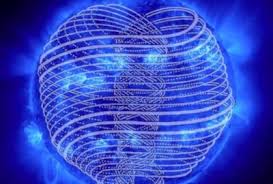
The Occult Chemistry (A. Besant, C.W. Leadbeater) based all the descriptions of the basic chemical elements on the ANU, or ultimate physical atom (UPA).
The third edition, published by C. Jinarajadasa in 1950 described it as « The ANU can scarcely be said to be a « thing », though it is the material out of which all things physical are composed. It is formed by the life-force and vanishes with its ebb. The life-force is known to Theosophists as Fohat, the force of which all the physical plane forces are differentiations. »
Read the Ancient Origins Article
Watch the YouTube Documentary
Access to The Occult Chemistry